

Your back has decided to make a simple trip across the room feel like an Olympic event. You reach for something on the floor, feel a familiar twinge, and immediately begin calculating whether bending down was really necessary.
Back pain can interfere with your daily activities. You might struggle to sit comfortably, feel pain when you walk and have difficulty dressing. In many cases, you will be advised to take medication and undergo some form of medical treatment. However, physical therapy can also help.
Rehabilitation can be used as part of an overall treatment regime to help patients regain strength, mobility and become more comfortable with everyday movement. It isn’t an overnight fix. Then again, meaningful recovery rarely comes with an instant-results button.
Physical Therapy Is More Than a Few Stretches
There’s a persistent idea that physical therapy means stretching on a mat and doing a handful of exercises until the pain disappears. If only it were that simple.
Assessment will include strength, flexibility, postural control and movement problems. A physiotherapist may ask about your symptoms related to sitting, lifting, walking or sleeping. This can help to determine what you need to work on.
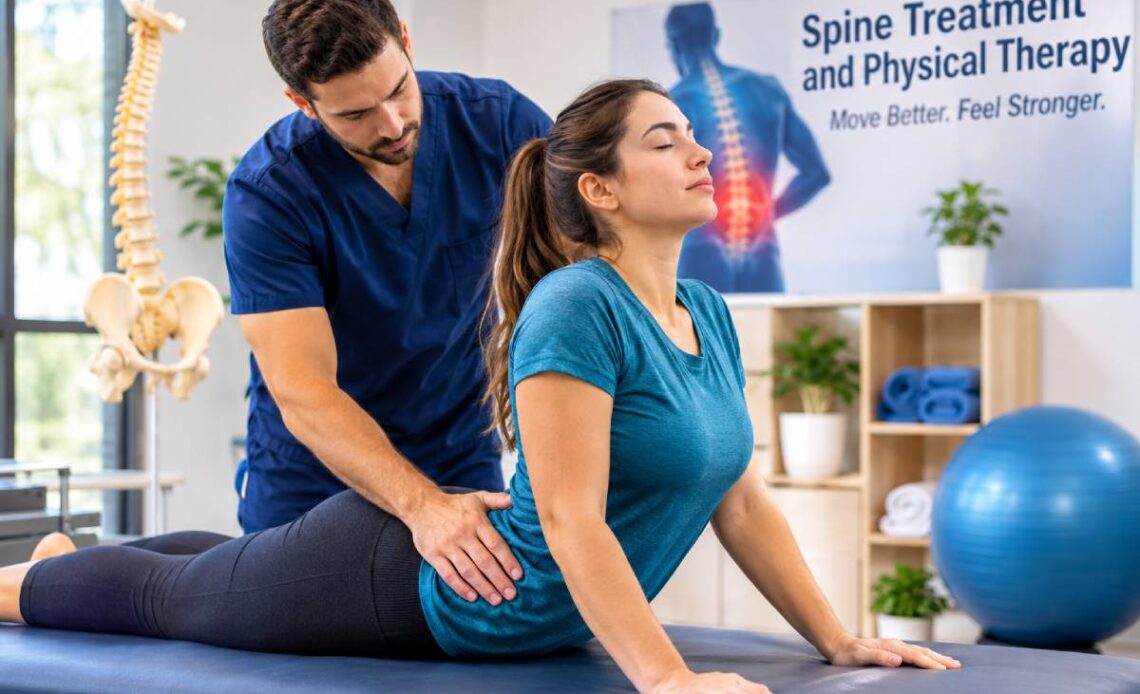
Your spine treatment will depend on your diagnosis, but could include gentle mobilisation, strengthening, balance training and advice about safer movement. The program should reflect the patient’s condition and abilities, not a generic exercise sheet handed to everyone who mentions back pain.
What Rehab Actually Adds to Spine Treatment
A muscle strain and a herniated disc are different problems. Spinal stenosis and degenerative conditions bring their own considerations, too. Naturally, their treatment approaches may differ. Physical therapy can be used to help treat your spine in a number of ways:
- Building muscular support: Strengthening the muscles in your trunk, hips and back.
- Restoring mobility: Exercising under guidance to help with stiffness.
- Improving everyday mechanics: Learning how to bend, lift, sit and change position in ways that are less stressful.
- Rebuilding endurance: Gradually becoming more active to help you cope with everyday activities, work and leisure.
The important word here is gradually. Trying to make up for weeks of inactivity in one ambitious workout is rarely a brilliant plan.
The Wrong Exercise Can Make Things Worse
Online videos make rehabilitation look easy. Watch someone demonstrate a stretch, copy the movement, and presumably feel better. Unfortunately, your spine may have other opinions.
An exercise that helps someone recovering from a muscular injury may aggravate symptoms in a person experiencing nerve irritation. Patients may have different responses to familiar exercises, depending on their underlying condition and the extent of their physical impairment.
Working alongside a physio will help ensure that the exercises you are doing are suitable. Tell your physio if you have any new, increased or unusual symptoms. Your rehab should be challenging but appropriate. It shouldn’t become a contest to see who can tolerate the most pain.
When Physical Therapy Needs a Different Approach
Not every spinal condition responds to rehabilitation alone. Sometimes, you may be prescribed medications, injections, further investigations and/or a referral for surgery.
If symptoms are not improving or getting worse, your healthcare professional will re-evaluate your diagnosis, appropriately review imaging and discuss other options with you. A good spine treatment should be dynamic so that it can change based on your response to treatment. New bowel or bladder control problems, numbness around the groin or saddle area, or rapidly progressing leg weakness can indicate serious nerve compression. Do not wait for a routine appointment if these symptoms occur.
Consistency Beats the Occasional Heroic Workout
Rehabilitation works best when the routine is realistic enough to maintain. Following any recommended exercises at home, slowly increasing activity and taking regular breaks from sitting will all help you.
If you feel like the exercises are too much, your symptoms have changed or you are still struggling with everyday tasks, then it is important to communicate this with your care team so they can see if they need to make any changes. A sustainable routine won’t be quite as exciting as a really intense workout, but that is totally okay. We want to make sure we are making progress.
Make Rehabilitation Part of the Bigger Picture
Treating the spine not only aims to alleviate symptoms, but also target the root cause, and provides ways to overcome individual limitations.
Physical therapy can be used in a planned way to help achieve these goals. If the correct rehabilitation is provided to match the individual diagnosis, it can help build strength, improve mobility and give increased confidence to carry out everyday tasks.