

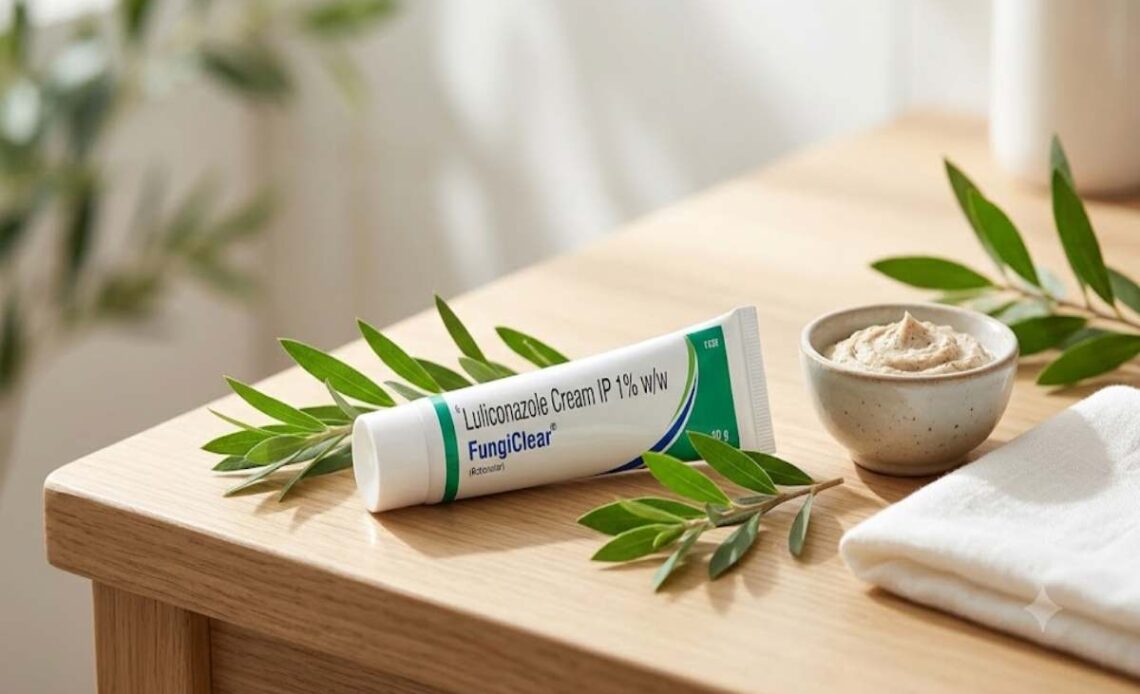
Fungal skin infections are among the most common dermatological problems worldwide. Conditions like athlete’s foot, ringworm, jock itch, and fungal infections in skin folds affect millions of people every year. Fortunately, modern antifungal medicines provide effective treatment, and luliconazole cream IP 1 w/w has become one of the preferred topical options prescribed by dermatologists.
Unlike many older antifungal creams that require prolonged treatment, luliconazole cream IP 1 w/w is known for its potent antifungal activity and comparatively shorter treatment duration for many infections.
Quick Facts
| Feature | Details |
| Generic Name | Luliconazole |
| Strength | 1% w/w |
| Drug Class | Imidazole Antifungal |
| Form | Topical Cream |
| Prescription | Usually a prescription medicine |
| Common Uses | Ringworm, Athlete’s Foot, Jock Itch |
| Application | External Use Only |
| Duration | Usually 1–2 weeks depending on infection |
What Is Luliconazole Cream IP 1 w/w?
An ointment used for topical antifungal treatment to get rid of the most common fungus-causing infections on the skin; a luliconazole cream IP 1% w/w.
The “IP” indicates that the formulation complies with the standards of the Indian Pharmacopeia.
It works by inhibiting the production of ergosterol, a key element in fungal cell membranes, causing the fungal cell to collapse and ultimately die. Prescribed for focal fungal infections. Due to its high potential, most doctors recommend treatment with antifungal ointments containing fluconazole locally.
Common Uses of Luliconazole Cream IP 1 w/w
Doctors prescribe luliconazole cream IP 1% w/w for several fungal skin infections.
1. Ringworm (Tinea Corporis)
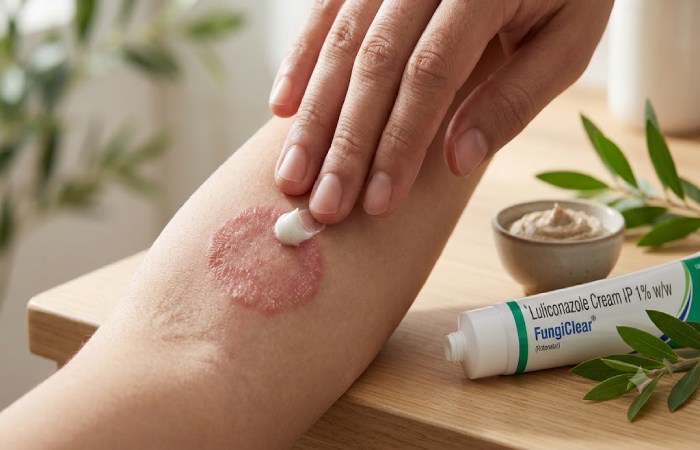
Ringworm appears as circular, itchy red patches with raised borders.
Symptoms
- Circular rash
- Itching
- Redness
- Scaling
- Mild burning
2. Athlete’s Foot (Tinea Pedis)
Common among athletes and individuals who wear closed footwear for long periods.
Symptoms include:
- Cracked skin
- Burning sensation
- Peeling
- Itching between toes
3. Jock Itch (Tinea Cruris)
Affects the groin area.
Common signs include:
- Red rash
- Severe itching
- Burning
- Skin peeling
4. Fungal Skin Fold Infections
Occurs in warm and moist body areas including:
- Under breasts
- Groin
- Neck folds
- Between fingers
- Between toes
How Does It Work?
Luliconazole inhibits an enzyme called lanosterol 14-alpha demethylase. This enzyme is essential for the synthesis of ergosterol.
Without ergosterol:
- Cell membrane weakens
- Fungal growth stops
- Infection gradually clears
Its strong affinity for fungal cells makes it highly effective even with once-daily application in many cases.
Benefits
- Broad-Spectrum Activity
Works against many dermatophytes responsible for common fungal infections.
- Once Daily Application
Convenient compared to creams requiring multiple daily applications.
- Faster Symptom Relief
Improvement in symptoms of redness and irritation often happens in the first week, but should be applied for the full course of treatment if prescribed.
- Good Skin Penetration
Provides sustained antifungal activity in the affected skin.
How to Apply Luliconazole Cream ip 1 w/w
Follow these steps:
- Wash hands.
- Clean the infected area.
- Dry thoroughly.
- Apply a thin layer.
- Rub gently.
- Wash hands again unless treating the hands.
Avoid covering with a non-permeable dressing unless specifically instructed.
Recommended Dosage
| Infection | Typical Duration |
| Ringworm | 1 week |
| Jock Itch | 1 week |
| Athlete’s Foot | 2 weeks |
| Other fungal infections | As prescribed |
Never stop treatment early, even if symptoms improve.
Advantages Compared With Older Antifungals
| Feature | Luliconazole | Older Antifungals |
| Application | Once daily | Often 2–3 times daily |
| Skin Penetration | Excellent | Moderate |
| Treatment Duration | Shorter for many infections | Usually longer |
| Patient Compliance | Better | Lower |
Possible Side Effects
Most people tolerate the medicine well.
Some may experience:
- Mild burning
- Skin irritation
- Redness
- Dryness
- Itching
- Temporary discomfort
Seek medical attention if severe swelling, blistering, or signs of an allergic reaction occur.
Who Should Avoid It?
Consult a healthcare provider before using if you:
- Have a known allergy to luliconazole
- Have open wounds at the application site
- Are pregnant or breastfeeding (use only if advised)
- Are treating young children unless directed by a doctor
Precautions
- For external use only.
- Avoid contact with eyes, nose, mouth, and genital mucosa.
- Do not apply on large areas unless prescribed.
- Keep the treated area clean and dry.
- Avoid sharing towels or clothing to reduce the spread of fungal infections.
Tips for Faster Recovery
| Tip | Benefit |
| Keep skin dry | Prevents fungal growth |
| Change socks daily | Reduces reinfection |
| Wear breathable clothing | Lowers moisture |
| Wash towels regularly | Limits fungal spread |
| Complete treatment | Helps prevent recurrence |
Storage Instructions
Store the cream:
- Below the temperature mentioned on the product label.
- Away from direct sunlight.
- In a dry place.
- Out of reach of children.
- With the tube tightly closed after use.
Estimated Price in India
Prices vary depending on the manufacturer, pack size, and pharmacy.
| Pack Size | Approximate Price (INR) |
| 10 g | ₹180–₹300 |
| 20 g | ₹300–₹500 |
Always check current prices with local pharmacies or reputable online medicine platforms.
When Should You See a Doctor?
Consult a healthcare professional if:
- Symptoms worsen.
- No improvement is seen after completing treatment.
- The infection spreads.
- Severe irritation develops.
- The infection frequently recurs.
Final Thoughts
Luliconazole cream IP 1 w/w is an effective topical antifungal treatment for common fungal skin infections such as ringworm, athlete’s foot, and jock itch. Its once-daily application, strong antifungal activity, and relatively short treatment duration make it a popular choice in dermatology.
That is, provided that it is not applied properly and good standard practices in the application are used, the treatment can be extremely effective. If there is evidence for a continuation of symptoms or recurrence, then medical advice may need to be sought for the confirmation of diagnosis and assessment for ongoing treatment.
Disclaimer
This article is for educational purposes only and should not replace professional medical advice. Always use prescription medicines, including luliconazole cream IP 1% w/w, according to the guidance of a qualified healthcare professional.