
igraft best hair tra – Hair loss treatment is no longer simply a choice between medicines and a traditional hair transplant. Clinics now promote FUE, DFI, hybrid procedures, GFC, PRP and other approaches, making it difficult for a beginner to understand what actually matters.
That is where searches such as “igraft best hair tra” become interesting. iGraft Global Hair Services operates in India and currently lists centers in Pune, Hyderabad, Bangalore and Vijayawada. The clinic says it has operated since 2015 and offers both surgical and non-surgical hair-loss treatments.
But calling any clinic “the best” requires more than looking at marketing claims. The more useful question is: Is iGraft a sensible option for your particular pattern of hair loss, donor supply, expectations and budget?
What Is iGraft?
iGraft Global Hair Services is an Indian hair and skin clinic network offering hair transplantation and hair-loss treatments. Its current website identifies Pune, Hyderabad, Bangalore and Vijayawada as its main locations.
Its treatment menu includes Active FUE, DFI hair transplantation, iGraft Hybrid, revision transplantation, non-surgical hair replacement and treatments such as GFC. This distinction matters because not every person with thinning hair needs a transplant.
For someone with early androgenetic alopecia, stabilizing continuing hair loss may be more important than immediately adding grafts. For someone with a stable receding hairline and a healthy donor area, transplantation may make considerably more sense.
The American Academy of Dermatology recommends a proper scalp examination before transplantation and notes that some patients may require blood tests or other investigations to determine the cause of hair loss.
igraft best hair tra – Transplant Techniques
Active FUE
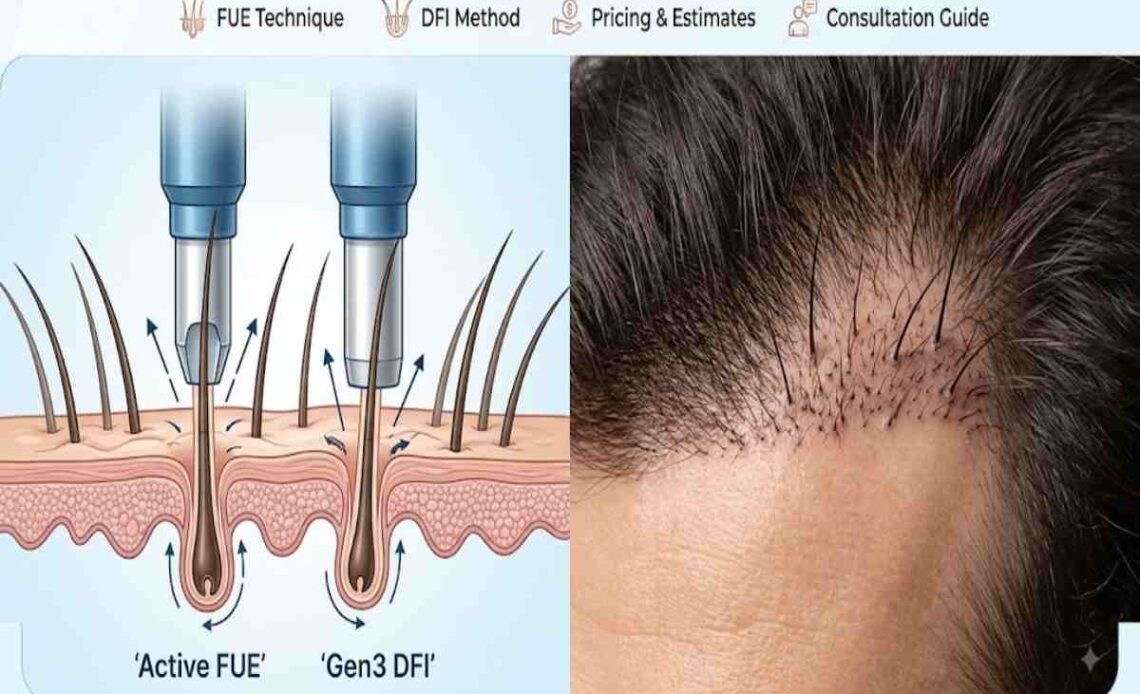
iGraft describes Active FUE as an enhanced form of follicular unit extraction. Its published explanation focuses on extracting follicular units individually rather than using a linear strip, with the goal of reducing visible scarring.
FUE itself is an established transplantation method. Modern literature describes it as a widely used technique in which follicular units are extracted using small punches and then transplanted into recipient areas.
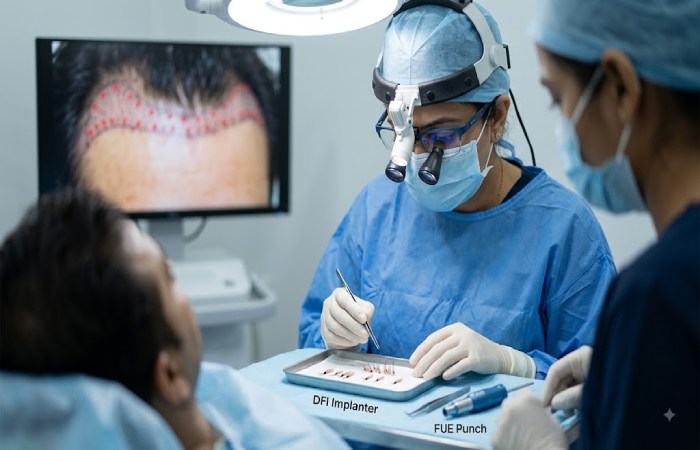
However, the important point for patients is that FUE is a surgical technique, not a guarantee of a particular result. Graft selection, punch design, extraction angle, transection, storage, implantation, recipient-site design and postoperative care can all affect the outcome.
DFI / Gen3 DFI
iGraft promotes Direct Follicle Implantation, or DFI, as one of its flagship procedures. Its current pricing page lists Gen3 DFI at ₹50 per follicle. The clinic also makes strong claims about its DFI technology and graft survival on its promotional materials. Those claims should be treated as clinic-specific marketing claims rather than independently established benchmarks.
This is an important distinction for anyone researching igraft best hair tra treatments. A proprietary name does not automatically mean the procedure is clinically superior to conventional FUE. The underlying fundamentals remain the same: appropriate patient selection, careful harvesting, graft preservation, recipient-site design and competent implantation.
What Does iGraft Cost?
One of the useful aspects of iGraft’s website is that it publicly displays per-graft pricing.
| Procedure | Published rate |
|---|---|
| Active FUE | ₹45 per graft |
| Gen3 DFI | ₹50 per follicle/graft unit |
These are published reference rates rather than a personalised final quotation. For example, using the published rate alone:
| Graft requirement | Active FUE at ₹45 | DFI at ₹50 |
|---|---|---|
| 2,000 | ₹90,000 | ₹1,00,000 |
| 2,500 | ₹1,12,500 | ₹1,25,000 |
| 3,000 | ₹1,35,000 | ₹1,50,000 |
| 4,000 | ₹1,80,000 | ₹2,00,000 |
| 5,000 | ₹2,25,000 | ₹2,50,000 |
These calculations are based only on the clinic’s advertised rates and should not be interpreted as guaranteed package prices. Taxes, medicines, consultations, investigations, aftercare or additional treatments may change the final amount. iGraft’s Bangalore information similarly states that its published rates are ₹45 per graft for Active FUE and ₹50 per graft unit for Gen3 DFI.
Why the cheapest quote can be misleading
Suppose Clinic A charges less per graft but recommends 4,500 grafts while Clinic B recommends 3,000 grafts after a more conservative assessment. The headline price does not tell you which plan is better.
A good consultation should explain:
- Your estimated graft requirement.
- Which scalp zones will receive grafts.
- Your donor density.
- How much donor hair should be reserved for future loss.
- Whether native hair needs medical treatment.
- Who performs each stage of the surgery.
- What happens if the result is below expectations.
Is iGraft Really One of the Best Hair Clinics?
There is no objective evidence that allows us to label iGraft as universally “the best” hair tra clinic in India. That does not mean it is necessarily a poor choice. It means patients should separate marketing positioning from independently demonstrated clinical superiority.
A recent medical review of hair transplantation confirms that both FUE and strip excision remain established hair-transplant methods. The review emphasises patient selection, technical considerations and postoperative care rather than a single branded technique being universally superior.
Similarly, a 2026 review of FUE complications identifies factors such as graft handling, punch design, follicular-unit density and ischemia time as variables that can influence outcomes. That gives prospective patients a better framework for judging iGraft—or any other clinic.
iGraft Reviews: What Do Patients Say?
Online reviews produce a mixed picture. What Clinic currently lists iGraft Global Hair Services in Pune with 4.7/5 from 13 verified reviews. One published patient account describes undergoing a DFI procedure and being satisfied with the resulting fuller appearance. The Hyderabad listing shows 4.7/5 from three verified reviews, including a patient who reported paying ₹1.69 lakh and seeing definite results around eight months after treatment.
However, Trustpilot presents a very different picture. Its current iGraft Global profile shows a 1.5/5 TrustScore based on 37 reviews, including both highly positive older reviews and negative experiences.
A July 2026 review, for example, alleged that the patient’s expectations about specialist involvement and post-procedure support were not met. That is an individual account, not proof of a systemic problem, but it is relevant because it highlights an issue every prospective patient should clarify before paying a deposit: who exactly performs the procedure? The conflicting review platforms are themselves a reason not to make the decision from star ratings alone.
Who May Be a Good Candidate?
A suitable candidate typically needs a diagnosis that is compatible with transplantation, sufficient donor hair and realistic expectations. The AAD explains that a dermatologist can assess whether someone is a suitable candidate and that a completely full head of hair may not be a realistic objective; improving fullness may be the more appropriate goal. Candidates should also understand that hair transplantation is not risk-free.
A 2026 review of FUE complications reports possible issues involving pain, swelling, bleeding, infection, donor depletion, cysts, folliculitis, shock loss and unnatural results. The authors emphasise patient selection, surgical technique and postoperative care as important risk-reduction factors.
iGraft vs Generic FUE: What Actually Matters?
The biggest mistake is comparing a branded procedure with another branded procedure as though the name determines the result. Instead, compare the clinical process.
| Factor | What to evaluate |
|---|---|
| Diagnosis | Has the cause of hair loss been established? |
| Doctor | Is a qualified doctor actively involved? |
| Donor area | Is density measured and future supply considered? |
| Hairline | Is the design age-appropriate? |
| Graft count | Is it justified rather than simply maximised? |
| Extraction | How are grafts harvested and protected? |
| Implantation | Who places the grafts? |
| Aftercare | How long is follow-up provided? |
| Transparency | Are risks and limitations explained? |
| Revision plan | Is future hair loss considered? |
This approach is more useful than asking whether DFI or FUE has the more impressive name.
The Biggest Red Flags to Watch For
Be cautious if a clinic:
- Guarantees a particular percentage of success.
- Promises a completely full head regardless of donor supply.
- Pushes you to book immediately.
- Cannot clearly identify the operating doctor.
- Avoids discussing the possibility of future hair loss.
- Gives a graft number without examining your scalp.
- Shows only heavily selected photographs.
- Treats online reviews as proof of medical quality.
The modern evidence base reinforces why these questions matter: graft survival and complications depend on multiple technical and patient-related variables rather than one headline technology.
Verdict on iGraft
iGraft is a legitimate Indian hair-restoration provider with multiple locations, publicly listed pricing and a broad range of surgical and non-surgical hair treatments. Its online patient feedback, however, is inconsistent across platforms, so it would be difficult to responsibly describe it as the universally best hair-transplant provider.
For someone considering iGraft, the strongest reason to proceed should not be a promotional claim about DFI or a high star rating. It should be a doctor-led consultation that produces a sensible diagnosis, conservative donor strategy, realistic graft estimate, and transparent explanation of who will perform the procedure.
iGraft may be worth including in a shortlist, particularly for patients in its listed service cities, but compare the proposed surgical plan with at least two other qualified hair-restoration providers before committing. For a permanent surgical decision, the quality of the plan matters more than the clinic’s marketing label.
Final Recommendation
If you are researching igraft best hair tra options, treat iGraft as a clinic to investigate—not a result that has already been proven for you. Get a scalp assessment, ask exactly who will perform each surgical stage, request a written graft plan, and compare the proposal with independent consultations before making a decision. That approach gives beginners a safer way to navigate hair-transplant marketing while still using the clinical criteria that matter to experienced patients.
Frequently Asked Questions
Is iGraft good for hair transplantation?
iGraft offers established transplantation approaches such as FUE as well as its branded DFI procedures. Public reviews are mixed, so prospective patients should assess the individual doctor, treatment plan, donor strategy, and follow-up rather than relying solely on ratings.
What is the price of an iGraft hair transplant?
iGraft’s published pricing currently lists Active FUE at ₹45 per graft and Gen3 DFI at ₹50 per follicle/graft unit. The final cost can vary according to the individual treatment plan and additional services.
Is DFI better than FUE?
Not automatically. FUE is a well-established hair-transplant method, while DFI is a branded approach promoted by iGraft. The quality of diagnosis, harvesting, graft handling, implantation and aftercare can have greater practical importance than the procedure’s marketing name.
How long does a hair transplant take?
The AAD states that a hair transplant can take approximately four to eight hours, with larger procedures sometimes requiring additional time or another session.
Should I choose a clinic based on online reviews?
No. Reviews can reveal useful information about communication, service and patient experiences, but they are not a substitute for evaluating medical qualifications, surgical planning, comparable long-term results and complication management.
What is more important than finding the “best” clinic?
Find the best-fit surgeon and treatment plan for your specific hair loss. Donor capacity, hair-loss stability, hairline design, graft handling and long-term planning are more meaningful decision criteria than a generic “best clinic” label.